






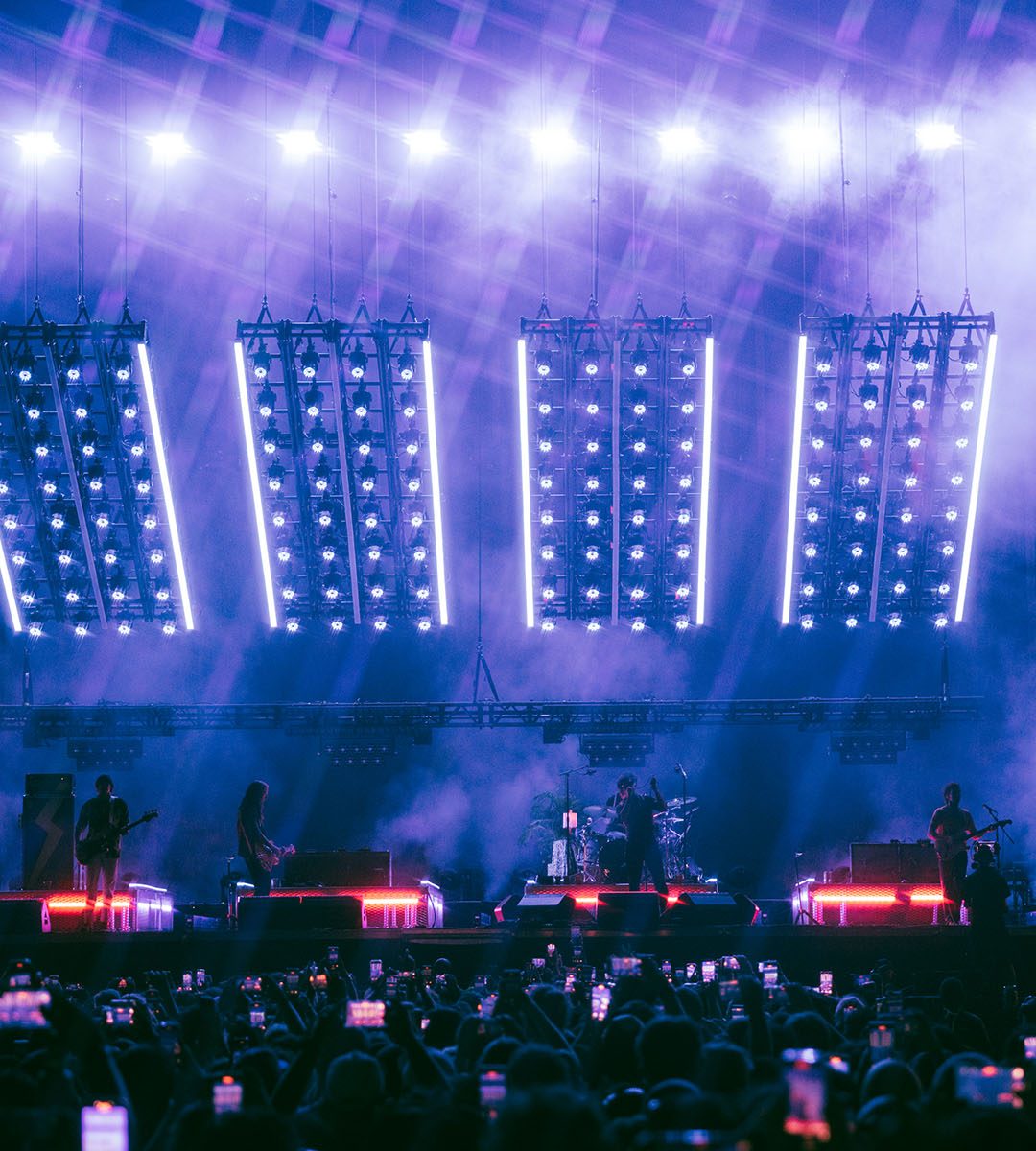
The Strokes
Slottsskogen Friday August 13
The Strokes are a band from New York City. Since their debut, their beloved discography has defined the sound of a generation. Not by inventing something entirely new, but by making something familiar feel thrillingly fresh. When The Strokes emerged at the turn of the millennium, their jagged, interlocking guitars, deceptively simple melodies and Julian Casablancas’ gloriously disaffected vocals seemed to distil decades of rock history into something unmistakably their own. With their effortless cool, scruffy elegance and an almost otherworldly ability to write songs that sounded like instant classics, they didn’t just help bring guitar music back into the spotlight. They made an entire generation want to start a band.
Unlike their New York predecessors Television and The Velvet Underground, whose legendary reputations grew largely in retrospect, The Strokes became icons almost overnight. And for more than a quarter of a century, they’ve had to live with the expectations that come with it. Sometimes they’ve embraced the sound that made them famous, as on “Room on Fire” (2003). At other times, they’ve seemed determined to move beyond it, pushing their music towards synthesizers, psychedelia and increasingly unexpected musical directions. On their seventh album, “Reality Awaits” (2026), that restless spirit takes another strange turn. Julian Casablancas’ famously distorted vocals are now frequently drenched in Auto-Tune, while the band’s familiar guitar interplay collides with darker, more synthetic sounds. Yet through it all, The Strokes remain a band whose songs continue to find new generations of listeners. This summer, one of the most influential bands of the 21st century will play Way Out West.


